Why Are HAZMAT Commercial Truck Accidents So Dangerous?
Published:
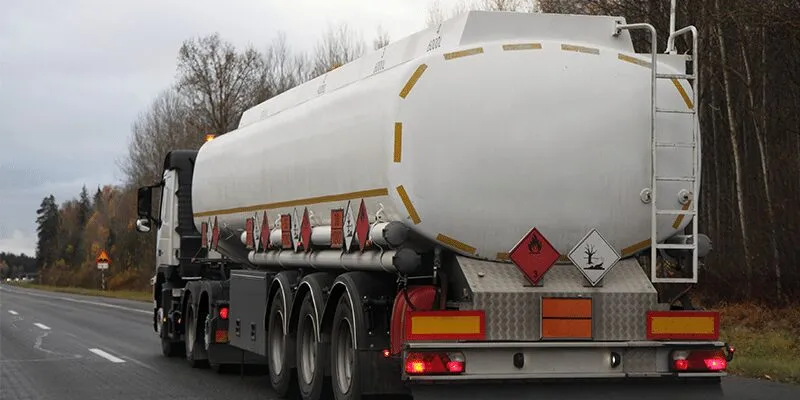
Every day, more than 1.2 million shipments of hazardous materials move across the country by truck, rail, air and water, totaling more than 3.3 billion tons a year, according to the U.S. Department of Transportation. Most arrive without incident. When a truck carrying those materials crashes, the consequences reach well past the vehicles involved.
Here is an overview of hazmat-related commercial truck accidents and how to protect your rights if you are injured in a crash.
Do You Have a Case?WHAT DOES THE TERM “HAZMAT” MEAN?
“Hazmat” is shorthand for hazardous materials. Federal regulations at 49 CFR 171.8 define a hazardous material as a substance the Secretary of Transportation has determined is “capable of posing an unreasonable risk to health, safety, and property when transported in commerce.” In practice, that means substances that are flammable, toxic, corrosive, explosive or otherwise likely to cause serious harm if released.
Because of that risk, federal rules govern how these materials are classified, packaged, labeled, loaded, placarded and routed.
Hazardous materials can be gases, liquids or solids. 49 CFR 173.2 sorts them into nine hazard classes:
- Class 1: Explosives
- Class 2: Gases (flammable, non-flammable and poisonous)
- Class 3: Flammable and combustible liquids
- Class 4: Flammable solids, spontaneously combustible materials and dangerous-when-wet materials
- Class 5: Oxidizers and organic peroxides
- Class 6: Poisonous materials and infectious substances
- Class 7: Radioactive materials
- Class 8: Corrosive materials
- Class 9: Miscellaneous hazardous materials
Recommended reading: The Latest Michigan Car Accident Statistics: What Drivers Should Know
HOW OFTEN DO HAZMAT TRUCK ACCIDENTS HAPPEN IN THE MIDWEST?
One point causes a lot of confusion in reporting on this topic, so it is worth being precise.
The Pipeline and Hazardous Materials Safety Administration (PHMSA) tracks hazmat incidents: any unintentional release reported on DOT Form 5800.1. An incident is not the same thing as a highway crash. Federal data has long shown that the large majority of hazmat incidents happen during loading, unloading or handling, and that only a small share are “accident-related,” meaning a vehicle crash or derailment. Those crash-related events are relatively rare, but they cause a disproportionate share of the serious harm and property damage.
A 2023 USA TODAY analysis of 10 years of PHMSA data across five Midwest states (Michigan, Ohio, Indiana, Illinois and Kentucky) reported that:
- The region accounted for roughly 20% of hazmat incidents nationally
- More than 46,000 hazmat incidents were logged across those states over the decade
- Roughly 400 people were injured
- Six people were killed, all of them truck drivers
- The most serious Michigan events involved tanker trucks
Those totals are incidents, not crashes. The takeaway is not that hazmat trucks crash constantly. It is that when a release does happen on a Michigan highway, the people closest to it are often the driver and whoever is sharing the road.
Recommended reading: Why Michigan Car Accident Victims Need Unlimited Personal Injury Protection (PIP) Benefits
WHY ARE HAZMAT-RELATED COMMERCIAL TRUCK ACCIDENTS SO DANGEROUS?
Unlike most automobile crashes, accidents involving hazardous materials can have widespread and long-lasting consequences. Trucks carry the overwhelming majority of hazmat shipments in the United States, which is why highway releases dominate the federal incident data.
Here is the collateral damage that can result from a hazmat crash:
- Fires and explosions
When a truck carrying flammable material overturns or is struck, the cargo can ignite quickly, causing an explosion or a fast-moving fire. That endangers everyone nearby, including other motorists, bystanders and first responders arriving before the cargo is identified. - Toxic exposure for residents and workers
A significant spill can release fumes or contaminate soil, storm drains and water supplies. Exposure injuries may not appear immediately, which complicates both medical treatment and the injury claim. - Environmental damage
Toxic chemicals can harm plants, animals, lakes and shorelines, and cleanup can continue long after the road reopens. - Sheer size and weight
Under federal law, a loaded semi can weigh up to 80,000 pounds, compared with roughly 4,000 pounds for an average passenger car. Michigan is the outlier: because state law regulates axle loading rather than gross weight, a properly configured 11-axle truck can legally weigh up to 164,000 pounds, according to MDOT. More mass means longer stopping distances and more force in a collision, even before the cargo is a factor.
Recommended reading: Who’s Responsible in a Semi-Truck Accident?
WHO IS AT FAULT FOR A HAZMAT TRUCK ACCIDENT?
These cases are more complex than crashes involving only passenger cars, because hazmat transport is heavily regulated and several businesses touch the load before it ever reaches the highway. Depending on the facts, responsibility may fall on the driver, the truck owner, the motor carrier, the shipper who packaged and labeled the material, a maintenance provider, or a parts or truck manufacturer.
Federal rules often supply the standard a defendant failed to meet. A few examples:
- Drivers hauling placarded loads need a hazardous materials endorsement on their CDL under 49 CFR 383.121
- Carriers hauling certain high-risk materials must hold an FMCSA Hazardous Materials Safety Permit
- Carriers must follow state hazmat routing designations and generally avoid heavily populated areas and tunnels under 49 CFR 397.67, with written route plans required for some loads
A violation does not automatically win a case, but it is powerful evidence, and the records behind it (driver qualification files, shipping papers, training records and electronic logs) can disappear if no one demands them early.
Because of that, it is wise to consult an experienced commercial truck accident lawyer quickly.
Recommended reading: Who Is Responsible for a Semi-Truck Accident?
WHAT ABOUT MY OWN INJURIES AND BILLS?
If you were hurt in a Michigan crash involving a motor vehicle, Michigan No-Fault benefits generally pay for medical care and wage loss regardless of who caused the crash. A separate claim against the at-fault parties can pursue pain and suffering and other damages when the injury meets Michigan’s threshold.
Most personal injury claims in Michigan must be filed within three years. See MCL 600.5805. No-Fault benefits have their own, much shorter notice deadlines under MCL 500.3145. Claims involving a governmental defendant can be shorter still.
ARE HAZARDOUS MATERIALS HIDING IN YOUR HOME?
Many everyday products contain hazardous materials. It is legal to store them and transport them in your own vehicle, but they deserve care. As a general rule, if a label says “warning,” “danger,” “corrosive,” “irritant,” “toxic,” “caution” or “flammable,” treat the item as hazardous.
Common examples of household hazardous waste include:
- Aerosol spray cans
- Beauty products such as nail polish, perfumes and hair color
- Paints, stains, thinners and removers
- Motor oil and other automotive fluids
- Lithium batteries
- Cleaning products such as bleach and disinfectants
- Swimming pool chemicals
- Weed killers, fertilizers and insecticides
- Pressurized containers, including fire extinguishers and propane cylinders
- Ammunition and fireworks
- Gasoline and diesel fuel
These products should be disposed of according to local regulations, and many municipalities hold collection days during the year. The Michigan Department of Environment, Great Lakes, and Energy has more on safe storage, disposal and drop-off locations.
Recommended reading: Do You Need A Lawyer For A Car Accident That Was Not Your Fault?
CONTACT AN EXPERIENCED COMMERCIAL TRUCK ACCIDENT LAWYER TODAY
If you or a loved one is injured in a Michigan truck accident, we can help. Our experienced lawyers have the skills, knowledge and resources to pursue the compensation you and your family deserve.
Semi-truck accident law is complicated, but finding the right Michigan commercial truck accident attorney is simple.
Don’t let the legal clock run out. Fill out the brief form below or call 1-800-CALL-SAM for a free, no-obligation consultation with a member of our legal team.
Do You Have a Case?