Michigan E-Bike Accident Lawyers
Whether you were hurt while riding an e-bike or injured by an e-bike rider, our attorneys can help.
Get help now
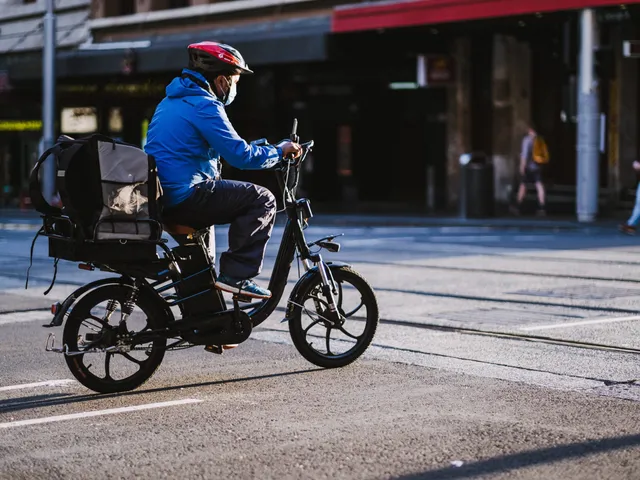
Electric bikes are changing how people travel and enjoy Michigan. They are faster and heavier than traditional bicycles, however, and the laws governing them are not always easy to understand.
When an e-bike rider is hit by a car, the lack of protection can lead to devastating injuries. Pedestrians, bicyclists and other people can also be seriously hurt when an e-bike is operated carelessly on a sidewalk, trail or roadway.
The Sam Bernstein Law Firm represents people injured in e-bike accidents throughout Michigan. Whether you were hurt while riding an e-bike or injured by an e-bike rider, our attorneys can investigate what happened, identify the available insurance coverage and explain your legal options.
Contact us today for a free consultation. You pay nothing unless we win your case.
Contact Us Today

What Is Legally Considered an E-Bike in Michigan?
Under Michigan law, a vehicle qualifies as an electric bicycle only if it has:
- A seat or saddle for the rider
- Fully operable pedals
- An electric motor of no more than 750 watts
- Motor assistance that stops at the maximum speed allowed for its class
Michigan recognizes three classes of e-bikes.
Class 1 E-Bikes
A Class 1 e-bike provides assistance only while the rider is pedaling. The motor stops providing assistance when the bike reaches 20 mph.
Class 2 E-Bikes
A Class 2 e-bike can use a throttle to move without the rider pedaling. Its motor assistance is limited to 20 mph.
Class 3 E-Bikes
A Class 3 e-bike provides assistance only while the rider is pedaling. The assistance stops when the bike reaches 28 mph.
A person must be at least 14 years old to operate a Class 3 e-bike in Michigan. Class 3 operators and passengers younger than 18 must wear an approved bicycle helmet.
Michigan does not impose a statewide minimum operating age for Class 1 or Class 2 e-bikes. However, parents should consider whether a child has the judgment, physical ability and traffic knowledge needed to control a heavy, motor-assisted bicycle safely.
Not Every Electric Two-Wheeler Is an E-Bike
The name used by a seller or manufacturer does not necessarily determine how a vehicle is classified under Michigan law.
A vehicle may be considered an electric moped, motorcycle, dirt bike or other motor vehicle, not an e-bike, if it:
- Has a motor exceeding 750 watts
- Can exceed 28 mph using motor assistance
- Operates primarily through a throttle at speeds above 20 mph
- Does not have fully operable pedals
- Has been modified so it no longer meets Michigan’s e-bike requirements
These vehicles may be subject to licensing, registration, insurance, equipment and helmet requirements. Some electric motorcycles and dirt bikes cannot legally be registered for street use because they were not built with the required safety equipment.
Before purchasing an electric bike for yourself or a child, check the manufacturer’s class label, motor wattage, maximum assisted speed and registration eligibility. Do not rely solely on how the vehicle is advertised.
A vehicle’s true classification can also become critically important after an accident. It may affect the traffic laws that applied, the insurance coverage available and the parties who may be held responsible.
Where Can E-Bikes Be Ridden in Michigan?
Michigan generally gives a person operating a qualifying e-bike the same rights and responsibilities as a person riding a traditional bicycle. However, the rules vary by e-bike class, location and the agency responsible for the property.
Roads, Bike Lanes and Shoulders
Class 1, Class 2 and Class 3 e-bikes may generally be operated anywhere a traditional bicycle is permitted, including roads, bike lanes and shoulders.
E-bike riders must obey applicable traffic signals, signs and right-of-way rules. They should travel in the same direction as traffic and use lights and other required equipment when riding in low-visibility conditions.
Sidewalks
Michigan law generally permits bicycles (and therefore qualifying e-bikes) on sidewalks unless riding is prohibited by a posted sign or local rule.
When riding on a sidewalk, an e-bike operator must yield to pedestrians and provide an audible warning before passing. Cities may place additional restrictions on sidewalk riding, particularly in downtown areas and business districts.
Because local rules differ, riders should check the ordinances and posted signs in the community where they plan to ride.
Trails and Pathways
Trail access depends on the e-bike class, the trail surface and the government agency managing the property.
Under current Michigan Department of Natural Resources guidance:
- Class 1 e-bikes are permitted on most state park, recreation area and state forest trails where traditional bicycles are allowed, with certain exceptions.
- Class 2 e-bikes may use those trails when the rider has a DNR-issued mobility permit.
- Class 3 e-bikes are not permitted on state-managed nonmotorized trails.
- All three e-bike classes may use DNR-managed roads where traditional bicycles are permitted.
Different rules may apply to locally managed trails, federal trails and private property. Always check signs and the rules of the agency responsible for a trail before riding.
High-powered electric motorcycles and “e-motos” are prohibited on nonmotorized trails. Depending on their classification, they may be allowed only on private property with permission or on designated motorized or off-road vehicle routes.
How Were You Injured?
I Was Injured While Riding an E-Bike
Were you hit by a car or injured because of another driver’s actions? Learn about Michigan No-Fault benefits, claims against negligent drivers and the evidence you should preserve.
Injured While RidingI Was Injured by an E-Bike Rider
Were you struck by an e-bike while walking, bicycling or using a sidewalk or trail? Learn about rider responsibility, possible insurance coverage and your right to seek compensation.
Injured by an E-Bike RiderInjured While Riding an E-Bike in Michigan?
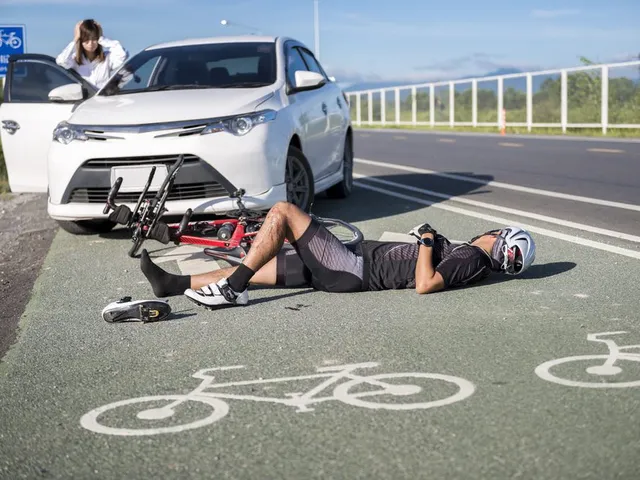
E-bike riders have almost no protection when struck by a car, SUV or truck. Even a relatively low-speed collision can throw a rider into traffic, onto the pavement or against another object.
Drivers have a duty to watch for bicyclists and e-bike riders. Unfortunately, many crashes occur because a driver fails to look before turning, entering an intersection, crossing a bike lane or opening a vehicle door.
Common causes of e-bike and motor vehicle crashes include:
- A driver failing to yield
- Unsafe left or right turns
- Distracted driving
- Speeding
- Driving under the influence
- Passing too closely
- Opening a vehicle door into a rider’s path
- Failing to check a bike lane before turning
- Backing out of a driveway or parking space without looking
- Poorly maintained or defective roads
An injured e-bike rider may have more than one potential claim.
Can an Injured E-Bike Rider Receive Michigan No-Fault Benefits?
When a qualifying e-bike rider is injured in an accident involving a motor vehicle, Michigan No-Fault personal protection insurance benefits may be available regardless of who caused the crash.
Depending on the circumstances and applicable coverage, these benefits may help pay for:
- Medical treatment
- A portion of lost wages
- Replacement services
- Attendant care
- Other allowable expenses
The responsible No-Fault insurer is not always the company insuring the vehicle that struck the rider. Coverage may depend on the rider’s policy, a spouse’s policy, household coverage and Michigan’s insurance priority rules.
If no applicable insurance policy can be identified, the Michigan Assigned Claims Plan may need to be considered.
Can an E-Bike Rider Bring a Claim Against the Driver?
An injured e-bike rider may also have a negligence claim against the driver who caused the collision. This is separate from the rider’s potential claim for No-Fault benefits.
A claim against an at-fault driver may include compensation for pain and suffering and other losses not paid through No-Fault benefits, subject to Michigan law and the seriousness of the injuries.
Other responsible parties may include:
- The owner of the vehicle
- A commercial driver’s employer
- A delivery company
- A rideshare company
- A business responsible for an unsafe vehicle
- A government agency responsible for a dangerous roadway condition
What If the Driver Claims the E-Bike Rider Was Breaking the Law?
Insurance companies may try to shift blame to the injured rider by arguing that the rider was in the wrong place, failed to use a helmet or operated an improperly classified vehicle.
Those allegations do not automatically determine who caused the crash. A driver may still be responsible for failing to yield, driving while distracted or violating another traffic law.
The circumstances must be investigated carefully. Important evidence may include:
- The police report
- Traffic or surveillance video
- Vehicle damage
- The location of the impact
- Witness statements
- Roadway markings and traffic signs
- The e-bike’s class label
- Motor and battery specifications
- Information about any modifications
- GPS, app or fitness-tracker data
What If the Driver Left the Scene?
Report the crash to the police immediately and provide as much information as possible about the vehicle and driver.
Witnesses, nearby cameras, vehicle debris, photographs and license plate information may help identify a hit-and-run driver. Uninsured motorist coverage or another insurance source may also be available, depending on the policies and circumstances.
Can You Recover Compensation If You Were Not Wearing a Helmet?
Possibly. Not wearing a helmet does not automatically make an e-bike rider responsible for a collision caused by a negligent driver.
An insurance company may argue that helmet use affected the type or severity of an injury. The medical evidence, type of injury, e-bike class and facts of the collision must be evaluated carefully.
If you were injured while riding an e-bike, contact us today. Our attorneys can investigate the driver, identify the applicable insurance and protect your right to pursue compensation.
Contact Us TodayLooking for more information about Michigan e-bike accidents? Jump to our frequently asked questions.
View E-Bike FAQsInjured by an E-Bike Rider in Michigan?
Pedestrians, traditional bicyclists and other trail or sidewalk users have little protection when struck by an e-bike. The combination of speed and weight can cause serious injuries, even when the rider does not believe they were traveling dangerously.
An e-bike operator may be responsible for an accident when the operator:
- Travels too fast for the surrounding conditions
- Fails to yield to a pedestrian
- Passes without warning
- Ignores a traffic signal or stop sign
- Rides against traffic
- Weaves through pedestrians or other trail users
- Uses a sidewalk or trail where e-bikes are prohibited
- Operates while distracted or impaired
- Carries passengers on a bike not designed for them
- Rides at night without adequate lighting
- Operates a vehicle that is too powerful or fast to qualify as an e-bike
- Loses control while riding carelessly or recklessly
Even a legal Class 1 or Class 2 e-bike can cause devastating injuries when it is not operated safely.
Do E-Bike Riders Have to Yield to Pedestrians?
E-bike riders generally have the same responsibilities as traditional bicyclists. On a sidewalk, a rider must yield the right of way to pedestrians and provide an audible warning before passing.
The fact that e-bikes may be permitted in a particular location does not give riders permission to endanger the people around them. A rider may still be responsible for traveling too fast, failing to keep a proper lookout or operating the e-bike in a way that is unsafe for the conditions.
What Insurance Pays When an E-Bike Hits Someone?
If no car, truck or other motor vehicle was involved, Michigan No-Fault benefits will generally not apply. Other possible sources of recovery may include:
- The rider’s homeowners insurance
- The rider’s renters insurance
- Insurance held by the e-bike’s owner
- A parent or guardian’s household coverage
- Commercial insurance when the rider was working
- Coverage maintained by an e-bike rental company
- Another applicable liability policy
Coverage varies significantly. Some policies contain exclusions for motorized vehicles or vehicles that exceed certain power or speed limits.
This makes the bike’s legal classification especially important. An insurance company may dispute coverage if the vehicle was modified or did not qualify as an e-bike under Michigan law.
Can a Parent Be Responsible for a Child’s E-Bike Accident?
A parent is not automatically responsible for every accident caused by a child. However, a parent or another adult may potentially be liable when the facts support a claim such as negligent supervision or negligent entrustment.
Relevant questions may include:
- Who purchased or owned the e-bike?
- Did the adult know the child was too young or inexperienced to operate it safely?
- Did the vehicle exceed Michigan’s legal e-bike limits?
- Had the child previously ridden recklessly?
- Did the adult know the child was riding in prohibited areas?
- Was the e-bike modified to increase its speed or power?
- What insurance policies covered the household or vehicle?
The fact that the rider was a minor should not prevent an injured person from investigating whether insurance or another source of compensation is available.
Who Else May Be Responsible?
Depending on how the accident occurred, other potentially responsible parties may include:
- The owner of the e-bike
- A parent or guardian under certain circumstances
- A rider’s employer
- A delivery or commercial business
- An e-bike rental company
- The manufacturer of a defective e-bike or component
- A repair shop that performed unsafe work
- A government agency responsible for a dangerous property condition
More than one person or business may share responsibility for the same accident.
What Compensation May Be Available?
A person injured by an e-bike rider may be entitled to seek compensation for:
- Medical expenses
- Lost income
- Reduced future earning capacity
- Rehabilitation and therapy
- Pain and suffering
- Emotional distress
- Scarring and disfigurement
- Disability and loss of mobility
- Future medical and personal-care needs
- Damage to personal property
- Funeral expenses and wrongful death damages
The insurance company may not volunteer information about every source of coverage. Our attorneys can investigate the accident, identify potentially responsible parties and determine which insurance policies may apply.
If you or a loved one was injured by an e-bike rider, contact us today for a free consultation.
Contact Us TodayDefective E-Bikes and Battery-Related Injuries
Not every e-bike injury is caused by a rider or driver. Defective brakes, steering components, tires, frames, throttles and electrical systems can cause serious crashes.
Lithium-ion batteries may also overheat, ignite or explode because of manufacturing defects, damage, incompatible chargers or faulty replacement components.
Keep the e-bike, battery, charger, packaging, receipts, manuals and damaged components after an accident or fire. Do not repair, discard or return them until the evidence has been evaluated.
What to Do After an E-Bike Accident
Your health comes first. Get emergency treatment when necessary and seek medical attention even if your injuries do not initially appear severe.
If you are able, take the following steps:
- Call the police and request an accident report.
- Photograph the scene, vehicles, e-bike and visible injuries.
- Obtain the names and contact information of witnesses.
- Get the driver’s or rider’s identifying and insurance information.
- Save the e-bike, helmet, clothing and damaged equipment.
- Photograph the e-bike’s class label, motor and battery.
- Keep purchase records, manuals and information about any modifications.
- Preserve app, GPS, fitness-tracker or trip data.
- Avoid posting about the accident on social media.
- Speak with an attorney before accepting a settlement or giving a recorded statement.
Nearby security cameras, traffic cameras and doorbell cameras may capture an accident, but the footage can be erased quickly. An early investigation gives your attorney a better opportunity to preserve it.
How The Sam Bernstein Law Firm Can Help
E-bike accidents can involve traffic laws, local ordinances, product classifications and several different insurance policies. Our attorneys can handle the legal and insurance issues while you focus on recovering.
We can:
- Investigate how the accident occurred
- Preserve video, physical and electronic evidence
- Determine whether the vehicle was legally an e-bike
- Review the bike’s class label and modification history
- Identify all potentially responsible parties
- Locate available insurance coverage
- Handle communications with insurance companies
- Pursue Michigan No-Fault benefits when a motor vehicle was involved
- Seek compensation from the parties responsible for your injuries
Michigan E-Bike Accident FAQs
Get Help After a Michigan E-Bike Accident
You should not have to determine the vehicle’s legal classification, track down insurance policies or fight with insurance companies while recovering from a serious injury.
Whether you were hurt while riding an e-bike or injured by an e-bike rider, The Sam Bernstein Law Firm is ready to help.
Contact us today for a free consultation. You pay nothing unless we win your case.
Contact Us TodayHear from our clients...
Trusted by thousands of satisfied Michigan clients and their families. 
“They kept me updated.”
“I will be forever grateful”
“I felt like I was a part of the family.”
“Very professional & knowledgeable.”
“Passionate, competent, committed.”
“They stand by their word.”
“Kind & compassionate.”
“You can trust them 100%.”
“Honest, caring, supportive.”
“They took personal interest in me.”
“I knew I was in good hands.”
“Number one person I'd recommend.”
“Sam's got you covered.”
“They kept me updated.”
“I will be forever grateful.”
“I felt like I was a part of the family.”
“Very professional & knowledgeable.”
“Passionate, competent, committed.”
“They stand by their word.”
“Kind & compassionate.”