Michigan Supreme Court Rules to Hold Landlords and Property Owners More Accountable for Slip and Fall Accidents
Published:
In July 2023 the Michigan Supreme Court changed how “open and obvious” hazards work in premises cases. The old rule often ended a claim before a jury heard whether the owner had been careful. The new approach still asks whether you should have seen the danger—but that goes to your share of fault, not to whether the owner owed you a duty in the first place.
You still have to prove negligence, damages, and (for noneconomic awards) comparative fault under the general tort statute. An experienced slip and fall lawyer can apply the 2023 cases to your facts.
Do You Have a Case?HOW DOES THE 2023 RULING BENEFIT SLIP AND FALL VICTIMS?
This is a court decision, not a new statute. On July 28, 2023, in Kandil-Elsayed v. F & E Oil, Inc. and Pinsky v. Kroger Co. of Michigan, the Court overruled the duty-bar version of open and obvious from Lugo v. Ameritech Corp. (2001).
Under Lugo, if an average person would have noticed the condition on casual inspection, the owner often owed no duty to warn or fix it. Most ice, pothole, and wet-floor claims died on that ground.
Now, a possessor of land still owes invitees a duty of reasonable care to protect them from an unreasonable risk of harm. Whether the hazard was visible is mainly a comparative-fault question: did the injured person fail to take reasonable care for their own safety, and by how much?
Owners do not get an automatic pass. Plaintiffs do not get an automatic win. See premises liability and the statute of limitations.
WHAT WAS THE OLD “OPEN AND OBVIOUS” DOCTRINE?
For about twenty years after Lugo, owners argued that a hazard was open and obvious if “an average person of ordinary intelligence would have discovered the danger and the risk upon casual inspection.” If that test was met, the case was often dismissed.
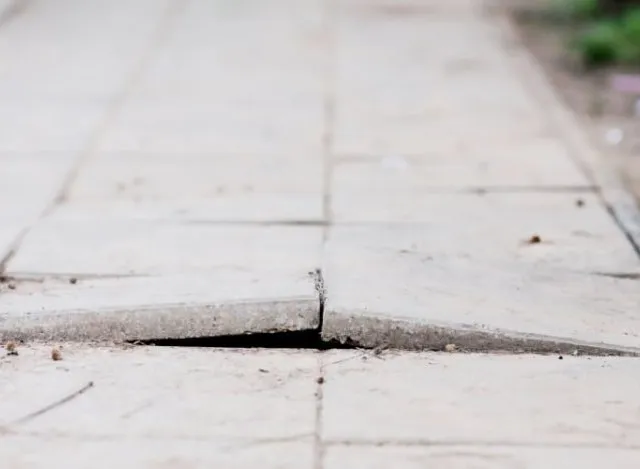
Lugo itself was a trip on a parking-lot pothole. The Court said ordinary potholes are the kind of everyday condition a reasonably prudent person should notice.
Lugo also created two “special aspect” exceptions that could restore a duty:
- Unreasonably dangerous — a uniquely high likelihood or severity of harm (the Court’s example was a 30-foot pit in a lot)
- Effectively unavoidable — the person had no reasonable way around it (one icy walkway as the only way out)
Those exceptions mattered when open and obvious wiped out duty. After Kandil-Elsayed, you no longer have to squeeze into a special-aspect box just to get into court. Visibility and avoidability still matter when a jury (or a judge on summary disposition) assigns percentages of fault.
DOES THIS AFFECT ICE AND SNOW FALLS?
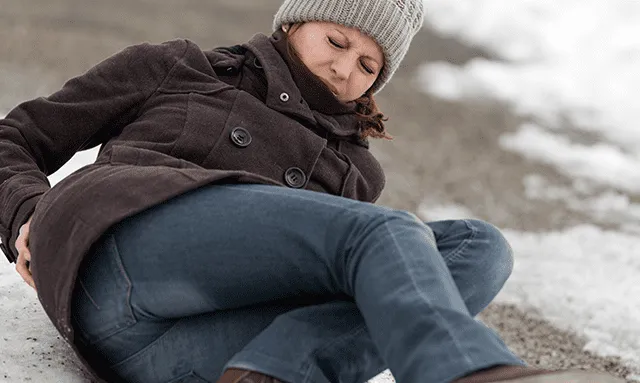
Often, yes. Michigan winters used to pair two owner-friendly ideas: snow and ice are “natural” here, and they are open and obvious. Many winter claims never reached a jury.
The 2023 decisions mean ice is not an automatic duty wipeout. Courts look at whether the owner took reasonable steps (salt, shovel, inspect, warn) and at the walker (phones, footwear, rushing). Winter hazards still cause a lot of injuries. The claim is just no longer dead on arrival because ice is visible.
WHAT IF I AM PARTLY AT FAULT?
Michigan’s modified comparative negligence rules still apply. Economic damages are reduced by your percentage of fault. For noneconomic damages (pain and suffering), MCL 600.2959 generally bars recovery if you are more than 50% at fault.
Example: a $100,000 noneconomic figure and 30% fault becomes $70,000 (before fees and costs). At 51% fault, that noneconomic piece is typically $0.
Texting instead of watching a step, or wearing smooth-soled shoes across a known ice patch, can be used to assign you a share. That is now the main fight—not “was the ice visible, case dismissed.”
CONTACT OUR EXPERIENCED SLIP AND FALL LAWYERS TODAY
If you were injured in a slip and fall on someone else’s property, we can help. Our lawyers have the experience to pursue the compensation you deserve.
Slip and fall law is complicated, but finding the right slip and fall accident attorney is simple.
Fill out the brief form below or contact us for a free, no-obligation consultation.
Do You Have a Case?